Mentorship For Real Estate Flippers In Florida: How to Analyse a Deal
Every flip that made money started with a decent analysis, and most of the ones that lost money didn’t. The maths isn’t hard. What trips people up is the inputs, because a small mistake in your after repair value or your rehab number ripples through everything. Here’s how to analyse a Florida flip in four steps, and where mentorship for real estate flippers in Florida saves you from guessing.
Step one: the after repair value
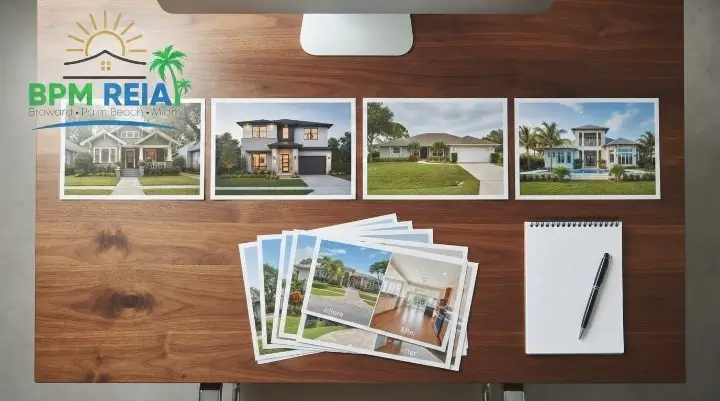
The after repair value, or ARV, is what the house should sell for once the work is done. Find it with sold comparables, not asking prices. Look for homes of similar size, bedrooms, bathrooms and condition, close to the property and sold in the last few months. Adjust for differences, and be honest about which comparables really match. Our after repair value guide goes through this in detail.
The usual error is picking the best sale on the street. Use the middle of the range, not the top.
Step two: the rehab budget
Walk the property and list every item: roof, windows, plumbing, electrical, air conditioning, kitchen, bathrooms, flooring, paint, landscaping. Get contractor quotes where you can. Then add a contingency, because something always turns up. Many investors add 10 to 15 percent, though your mentor may suggest more on an older house. In Florida, roof condition and insurance requirements deserve their own line.

Step three: holding costs
While you work on the house you pay for it. That means loan interest, property tax, insurance, utilities and any HOA dues. Multiply the monthly total by the number of months you expect to hold, then add a couple of months for delays. Add selling costs too, such as agent commission and closing costs. Holding costs are the number beginners forget, and it’s often the one that turns a profit into a break-even.
Step four: the 70% rule
The 70% rule is a quick way to find the most you should pay. The formula is:
Maximum offer = (ARV x 0.70) minus rehab costs
Here’s an example, and it’s an illustration, not a real deal. Say the ARV is $400,000 and the rehab budget is $60,000. Seventy percent of $400,000 is $280,000. Take off $60,000 and your maximum offer is $220,000.
The 30 percent left over is meant to cover your profit, holding costs, selling costs and financing. It’s a screening tool rather than a full analysis. In some higher-priced Florida markets you’ll struggle to find deals at 70%, and experienced investors sometimes work to a different percentage. That’s a judgement call, and it’s where a mentor helps, because they know what works in your county right now.
A stress test on the example flip
Using the example above, here is the same flip planned two ways. The second assumes the rehab runs 15 percent over and the sale takes three months longer.
| Item | Base plan | Stress test |
|---|---|---|
| Purchase price | $220,000 | $220,000 |
| Rehab budget | $60,000 | $69,000 (15% over) |
| Holding costs | $8,000 (4 months at $2,000) | $14,000 (7 months at $2,000) |
| Selling costs | $24,000 (6% of ARV) | $24,000 (6% of ARV) |
| Total cost | $312,000 | $327,000 |
| Sale price (ARV) | $400,000 | $400,000 |
| Profit before financing costs | $88,000 | $73,000 |
Illustration only. This is not a real deal, and the holding and selling figures are examples.
Putting it together
After the four steps, run the full numbers: purchase price, rehab, holding, selling costs and financing, against your ARV. What’s left is your profit. Then stress-test it. What if the sale takes three months longer? What if the rehab runs 15 percent over? If the deal still works, you’ve got something. If it only works on the best day, walk away. There’ll be another one.
Our guide on how to evaluate a real estate investment covers the wider picture, and fix and flip loans for beginners explains how financing affects your costs.
Where a mentor helps
You can learn this from a page. What you can’t get from a page is someone who says "I looked at a similar house in Broward last month, here’s the number I walked in at, and here’s why I passed." That’s what a dedicated mentor does. In our Core Coaching Program you have one for six months, with a 50/50 profit split on the deals you close together. The Elite Coaching Program runs twelve months and adds field time at seller appointments and property walkthroughs. Qualified members can also access up to 100% deal funding through our private lender network, and deal funding strategies in Florida covers other routes.
If you’d like to see the approach, visit our home flipping mentor page or read about flipping houses in Florida. Ready to have your numbers checked by someone who’s done it? Book a Discovery Call, or start at the BPM REIA homepage.
Frequently asked questions
What is ARV in house flipping?
ARV stands for after repair value, the price the house should sell for once renovations are finished. You estimate it from recent sold comparables of similar size and condition nearby.
How does the 70% rule work?
Multiply the ARV by 0.70, then subtract your rehab costs. The result is the most you should pay. It’s a screening shortcut, so you still need to run holding, selling and financing costs.
How much contingency should I add to a rehab budget?
Many investors add 10 to 15 percent. On older Florida houses, a mentor may suggest more depending on the roof, plumbing and electrical.
Mentorship For Real Estate Flippers In Florida: Book Your Discovery Call
Want someone to check your numbers on a real deal? Book a call and we’ll talk about how a mentor can help.